
The standard of care is the most important concept in dental malpractice law, and most dentists misunderstand how it actually works.
Here's the misunderstanding: dentists think the standard of care is about what you do clinically. It isn't. It's about what you can prove you did. And the only proof that matters is what's in your clinical notes.
When a malpractice claim is filed against you, an expert witness — a dentist appointed by the plaintiff's attorney — sits down with your records and asks one question: do these notes demonstrate that this dentist provided the level of care that a reasonably competent practitioner would provide under the same circumstances?
They don't watch a video of your appointment. They don't interview your nurse. They don't ask you what you remember. They read your notes. That's it.
If your notes answer their questions before they ask them, the case dies. If your notes leave gaps, those gaps get filled by the patient's version of events — and the patient's version is always worse than what actually happened.
This post is written dentist-to-dentist. It's technical, it's specific, and it's designed to change the way you think about what your notes are actually for.
What "standard of care" actually means in practice
The legal definition varies slightly by state, but the core is consistent: the standard of care is the degree of care, skill, and treatment that a reasonably competent dentist would provide under the same or similar circumstances.
Three things about that definition matter:
It's contextual, not absolute
The standard isn't 'the best possible care.' It's what a competent practitioner would do given the specific clinical situation, the available information, and the patient's circumstances. Monitoring a small incipient lesion rather than restoring it can absolutely meet the standard of care — as long as your reasoning is documented.
It's judged by peers, not patients
An expert witness — another dentist — determines whether you met the standard. They're evaluating your clinical decision-making, not the patient's satisfaction. But they can only evaluate decisions that are visible in your records.
It requires documentation of process, not just outcomes
Meeting the standard means demonstrating that you followed a proper clinical process: examined thoroughly, diagnosed appropriately, presented options, obtained consent, treated competently, and followed up. The outcome can be imperfect and you can still meet the standard — if your process was right and your notes show it.
That third point is where most dentists fail. You did the right thing clinically. You examined properly. You explained the options. You got consent. You treated well. But your note says "Examined. Discussed options. Crown prep UR6. Pt tolerated well." — and an expert witness reading that note has no evidence that any of the clinical process actually happened.
What an expert witness actually looks for in your records
I've spoken to dentists who've been through malpractice cases, and the pattern is always the same. The expert witness doesn't evaluate your records the way you'd expect. They're not reading the note and thinking "this seems reasonable." They're reading the note and looking for specific evidence of specific things.
Here's what they're looking for — and what they flag when it's missing.
Did the dentist take an adequate history?
Looking for
Documented medical history review, medication check, allergy confirmation, social history where relevant. Updated at recall appointments, not just at registration.
Flags when missing
No evidence of medical history review at the appointment in question. No record of medication reconciliation. Medical history form dated three years ago with no updates.
Did the dentist perform an adequate examination?
Looking for
Clinical findings documented — not just 'examined.' Specific hard and soft tissue findings. Radiographic findings described. Periodontal status recorded.
Flags when missing
Note says 'Exam NAD' or 'Comprehensive exam performed' with no documented findings. No soft tissue assessment. Radiographs taken but findings not described.
Was the diagnosis appropriate?
Looking for
Clear link between documented findings and the diagnosis. Differential diagnoses considered where appropriate. Clinical reasoning visible.
Flags when missing
Treatment rendered without a documented diagnosis. Findings present but no diagnostic conclusion drawn. Diagnosis appears to be assumption-based rather than findings-based.
Were treatment options presented?
Looking for
Multiple options documented, including the option of no treatment. Risks and benefits of each option outlined. Referral considered where appropriate.
Flags when missing
'Discussed options' without specifying which options. No mention of alternatives. No evidence that the patient was informed of the option to defer or decline treatment.
Was informed consent obtained?
Looking for
Documentation of the specific risks discussed. Record of the patient's questions or concerns. Clear statement that the patient understood and agreed.
Flags when missing
'Pt consented' or 'Pt happy to proceed' without any record of what information was provided. No mention of specific risks. No record of material risks relevant to the procedure.
Was the treatment delivered appropriately?
Looking for
Procedure documented in adequate detail. Materials and techniques specified. Anaesthesia documented (type, concentration, volume, technique). Any complications documented and how they were managed.
Flags when missing
Procedure documented in one line. No anaesthesia details. Complications omitted. Post-operative condition not recorded.
Were post-operative instructions given?
Looking for
Specific post-op instructions documented — what was said, not just that something was said. Follow-up plan documented. Emergency contact information provided.
Flags when missing
'Post-op instructions given' with no record of what they included. No follow-up plan documented. No safety net advice recorded.
Read through that list and think about your notes from yesterday. How many of those seven elements were consistently documented for every appointment?
If you're like most dentists, the answer is two or three. You documented the treatment and maybe the anaesthesia. Everything else — the history check, the examination findings, the diagnostic reasoning, the options discussed, the consent conversation, the post-op instructions — was done verbally and clinically but never captured in writing.
You met the standard of care. Your notes don't prove it. And in a malpractice case, those are two different things.
What it looks like: same appointment, two different notes
Let me show you what I mean with real clinical scenarios. Same appointment. Same clinical work. Two notes — one that would survive expert review, one that wouldn't.
Scenario: New patient comprehensive exam. Full mouth series taken. Generalised mild periodontitis. Treatment plan for SRP.
Comprehensive exam. FMX taken. Generalised perio. Discussed SRP. Schedule UR/UL quadrants. Pt happy to proceed.
Medical history reviewed and updated — no changes since registration. No allergies. No current medications. Clinical findings: Generalised 4-5mm pocketing with localised BOP UR6, UL4, LL6. Calculus deposits subgingival in all quadrants. Soft tissue: mild marginal erythema generalised. No mucosal abnormalities. Occlusion: Class I, no TM dysfunction. Radiographic findings (FMX): Generalised mild horizontal bone loss. No periapical pathology. UR7 DO radiolucency — monitor. LL8 partially erupted, mesioangular impaction — discussed referral for assessment. Diagnosis: Generalised mild-moderate chronic periodontitis (Stage II, Grade B). Treatment options discussed: 1. SRP with OHI and 3-month recall — recommended 2. OHI alone with monitoring — explained risk of disease progression 3. Referral to periodontist — offered, patient prefers treatment here Risks discussed: post-SRP sensitivity, incomplete resolution requiring further treatment or referral, need for long-term maintenance. Plan: SRP UR and UL quadrants next visit. LL and LR to follow. OHI reinforced — modified Bass technique, interdental brushes demonstrated. 3-month perio recall after completion. Patient confirmed understanding and consented to proceed.
Both dentists did the same clinical work. Both examined thoroughly. Both explained the options. Both got consent. But if a complaint lands in twelve months, only one of those notes proves it.
The first note takes 15 seconds to type. The second note takes 8-10 minutes. That's why most dentists write the first version. Not because they're careless — because they don't have 8-10 minutes between patients to type a comprehensive note.
Scenario: Crown prep on #30. Large failing MOD amalgam with crack line extending mesially. Vitality testing positive.
Crown prep #30. Imp taken. Temp crown placed. Pt tolerated well. Review 2/52.
#30: Large MOD amalgam with visible crack line extending mesially from marginal ridge. Tooth vital to cold test (EPT within normal limits). No symptoms. No periapical pathology on PA radiograph. Diagnosis: Cracked tooth syndrome — favourable prognosis with full coverage restoration. Treatment options discussed: 1. Full coverage PFM crown — recommended. Explained this provides maximum protection against further fracture propagation. 2. Direct composite replacement — explained reduced protection for remaining tooth structure, higher risk of further fracture. 3. Monitor — explained risk of catastrophic fracture, potential loss of vitality, possible extraction if fracture extends subgingivally. Risks of crown preparation discussed: post-operative sensitivity, possible loss of vitality requiring RCT, impression inaccuracy requiring remake, temporary crown dislodgement. Procedure: Crown prep under rubber dam. LA: 2% lidocaine 1:80k, 1.8ml, IAN block + long buccal. Preparation completed — adequate retention and resistance form. Ferrule adequate circumferentially. Impression: PVS (Aquasil), full arch upper and lower. Bite registration taken. Shade A2 (Vita). Temporary crown (Protemp) cemented with TempBond. Post-op instructions: Soft diet on that side for 24hrs. Avoid sticky foods. Temporary may feel slightly high — will settle. If temporary dislodges, contact practice. Ibuprofen 400mg if sensitivity. Review: 2 weeks for permanent crown fit. Patient informed and consented to all above.
Again — same clinical procedure. But the second note documents the diagnostic reasoning (why a crown and not a composite), the specific options presented, the material risks of the chosen treatment, the anaesthesia details, and the post-op instructions given. Every element the expert witness needs is there.
Why I know this matters
When my own complaint came through the GDC, the expert witness was a dentist. A peer. Someone who knew exactly what a reasonable practitioner would do in the clinical situations I'd been treating. The clinical work was fine — my expert confirmed that.
But the expert can only work with what's in the record. And my records didn't contain enough information to demonstrate the clinical process. I'd done the work. I hadn't documented it. The expert's report had to note, repeatedly, that my records were "lacking in clinical detail." Not because I was a bad clinician. Because I was a bad documenter.
That's what led me to build DigitalTCO. Not because I wanted to build a tech product — because I never wanted another dentist to sit in front of a regulator's report that says "records lacking in clinical detail" when they know, with absolute certainty, that the clinical work was right.
The documentation framework that proves standard of care
After my complaint, I developed a framework for clinical notes. It's based on what the expert witness was looking for and what my records failed to provide. Every note you write should answer these seven questions — because these are the seven questions an expert will ask.
The 7-Point Standard of Care Note
History confirmation
Medical history reviewed and updated. Medications confirmed. Allergies checked. This takes five seconds verbally — but if it's not in the note, the expert assumes it wasn't done.
Clinical findings
What you found on examination — not just what you did. Hard tissue, soft tissue, periodontal, radiographic. Normal findings matter too — 'soft tissue NAD' proves you examined it.
Diagnosis
Your clinical interpretation of the findings. The bridge between what you found and what you decided to do. Without a documented diagnosis, treatment appears arbitrary.
Options presented
Every realistic treatment option you discussed, including no treatment. Each option with its rationale. This proves the patient made an informed decision, not a directed one.
Consent with specifics
The material risks you discussed for the chosen treatment. Not 'risks explained' — which risks, specifically. The ones that would change a reasonable patient's decision if they knew about them.
Treatment delivered
The procedure in enough detail that another dentist reading the note could understand exactly what was done. Anaesthesia type, volume, technique. Materials used. Any complications and how they were managed.
Post-op and follow-up
What you told the patient to do after treatment. What to expect. When to call. When to come back. The safety net that proves you didn't just treat and discharge without aftercare.
If your note contains all seven elements, an expert witness reviewing your records will find evidence of standard of care at every stage of the clinical process. History, examination, diagnosis, options, consent, treatment, aftercare — the full chain is documented.
If your note is missing any of them, there's a gap. And gaps are where malpractice cases are won — not because you failed clinically, but because you can't prove you didn't.
The real problem: time
You already know all of this. Every dentist knows what a good note should contain. The problem was never knowledge — it was time.
A seven-point note for a crown prep takes 8-10 minutes to type. You've got eight minutes between patients. That maths doesn't work. So you write "Crown prep #30. Imp taken. Temp placed. Review 2/52." and move on. You know it's not enough. You also know you can't stop the clinic to type for ten minutes.
That's the problem I solved with DigitalTCO. You speak for 30-40 seconds after the appointment — naturally, the way you'd explain it to a colleague in the corridor — and the AI generates a structured note that hits all seven points. Findings documented. Diagnosis stated. Options listed. Consent detailed. Treatment described. Post-op specified.
It doesn't replace your clinical judgement. It captures it — in the detail that an expert witness would need to confirm you met the standard of care. Before the next patient sits down.
Over 1,000 dentists use DigitalTCO every day. They're not using it because they're bad documenters. They're using it because they're good clinicians who were trapped in a system that made proper documentation physically impossible within the time available. That constraint is now gone.
Your notes should prove what your clinical work already demonstrates
Record one note with DigitalTCO and compare it to what you wrote yesterday. The difference is the gap an expert witness would find.
28-day free trial. HIPAA-aligned. Works with any PMS.
Start My Free Trial →Up and running in 2 minutes. Works on your phone.
Frequently asked questions
What is the standard of care in dentistry?
The standard of care is the level of treatment, skill, and diligence that a reasonably competent dentist with similar training and experience would provide under the same or similar clinical circumstances. It's not the best possible care or the most advanced care — it's the care a competent peer would deliver. It's contextual, meaning the standard can vary based on the patient's specific clinical situation, the information available to the dentist at the time, and the clinical environment.
How does an expert witness use my clinical notes in a malpractice case?
An expert witness — typically a practising dentist in the same or a similar specialty — reviews your complete patient records and determines whether the documented care meets the standard. They evaluate the clinical process: was the history checked, was the examination adequate, was the diagnosis appropriate, were options discussed, was consent informed, was treatment competently delivered, and was follow-up arranged. They can only assess elements that are documented in the notes. Undocumented care is, for legal purposes, care that was not provided.
Can I meet the standard of care even if the clinical outcome is poor?
Yes. The standard of care relates to process, not outcome. A root canal that subsequently fails, an extraction that results in a dry socket, or a restoration that debonds are all known complications that can occur despite competent treatment. If your records demonstrate that you followed an appropriate clinical process — examined properly, diagnosed correctly, discussed risks, obtained informed consent, treated competently, and provided post-operative instructions — a poor outcome alone does not constitute a breach of the standard of care.
What's the difference between the standard of care and best practice?
Best practice is aspirational — it represents the ideal approach using the most current evidence and techniques. The standard of care is the baseline — it represents what a competent practitioner would do. You can meet the standard of care without necessarily following best practice, and you can follow best practice and still face a malpractice claim if your documentation doesn't prove it. The legal standard is competence, not excellence.
Does AI-generated documentation count as a valid clinical record?
Yes. The clinician remains responsible for reviewing and approving the note before it enters the patient record. AI tools like DigitalTCO generate a structured note from your voice dictation — you review it, edit anything that needs correction, and then add it to your PMS. The final note is your clinical record, regardless of how it was generated. The advantage of AI-generated notes is consistency: the same seven elements are captured every time, reducing the risk of documentation gaps that an expert witness would flag.
Related reading
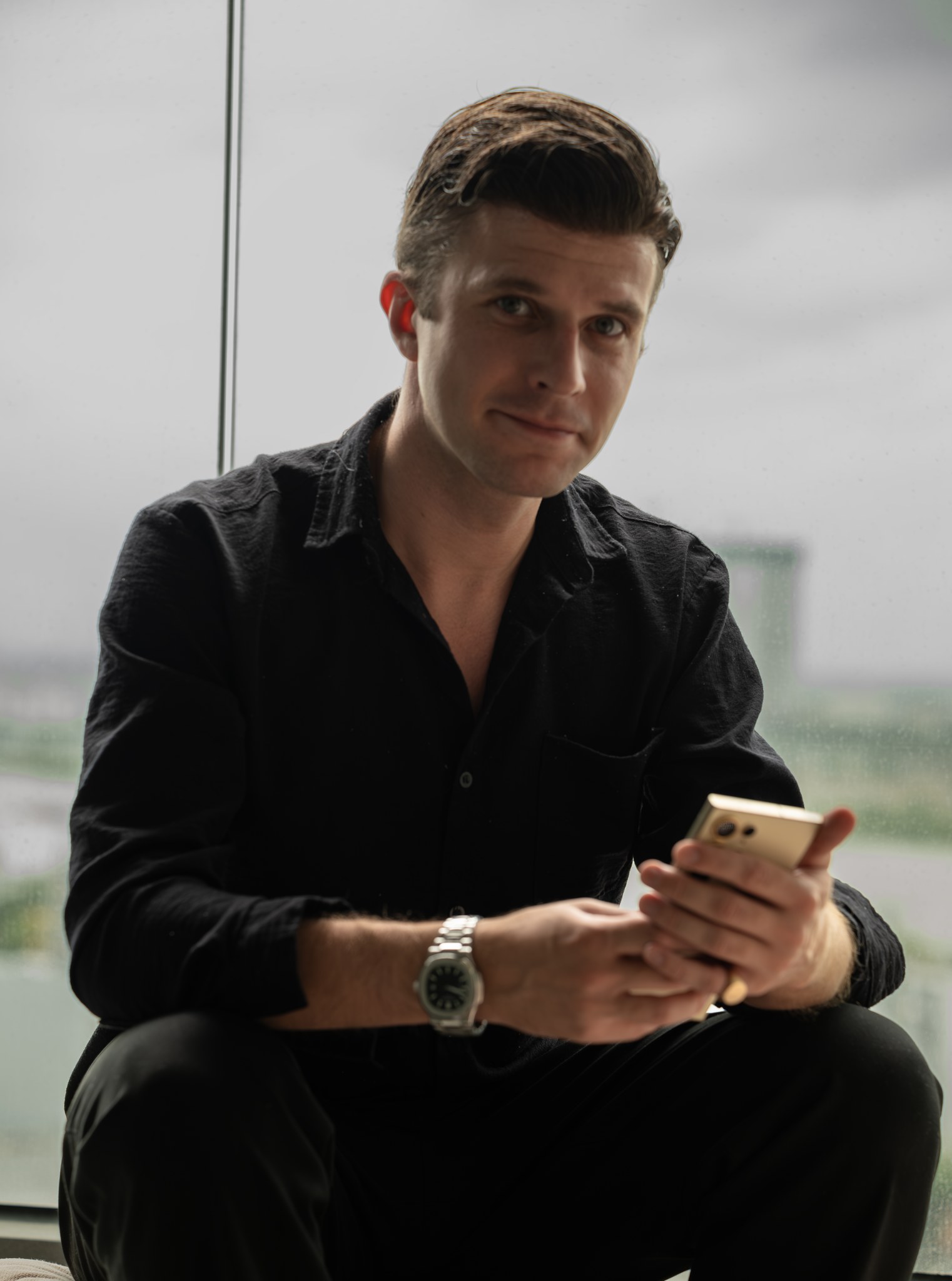
Kevin
BDS Dundee · Ex-dentist (2014–2026) · Founder, DigitalTCO
Kevin built DigitalTCO after a formal complaint exposed the gap between the clinical work he was doing and the records he was keeping. He created the AI dental documentation category in 2023 and the platform is now used by over 1,000 dentists daily across the UK and US.