
Poor record-keeping is cited in 40% of unsuccessful dental malpractice defences. Not poor clinical work. Poor records.
That means four out of ten dentists who lose a malpractice case didn't lose because they harmed the patient. They lost because their documentation couldn't prove they didn't.
I know this because I went through a formal complaint myself. My clinical work was fine. My records weren't. Seven words — "Examined. Discussed options. Pt happy to proceed" — repeated across multiple appointments. That's what I was defending my career with.
I survived. But the experience showed me that most dentists are making the same documentation mistakes I was — every single day — without realising they're building a malpractice case against themselves.
Here are the seven that matter most. Every one of them is something a malpractice attorney will look for in your charts. And every one of them is fixable.
Jump to:
Writing "Discussed options" without saying which ones
The scenario
"You perform a crown prep on #30. The tooth had a large MOD amalgam with a crack line. You discussed the option of a crown versus replacing the restoration versus monitoring. The patient chose the crown. Your note says: 'Discussed treatment options. Pt elected crown.'"
A malpractice attorney will read that note and ask: which options did you discuss? Did you mention the alternative of a large direct restoration? Did you explain the risks of each option? Did you tell the patient what happens if they choose to monitor instead?
Your note doesn't answer any of those questions. And in the eyes of a jury, if it isn't written down, it didn't happen. The patient's attorney will argue you never discussed alternatives — and your note proves their point, not yours.
This is the single most common documentation mistake in dentistry. Almost every dentist writes some version of 'discussed options' multiple times a day. And almost none of them document which options they actually discussed.
The fix
Document each option specifically: 'Discussed three treatment options: (1) full coverage crown — explained this provides the most protection for the remaining tooth structure given the crack line; (2) replacement of the existing amalgam with a direct composite — explained this is less protective but more conservative; (3) monitoring — explained the risk of further fracture or symptoms. Patient elected full coverage crown after understanding the risks of each alternative.' This takes 30 seconds to dictate with DigitalTCO. It takes 5-10 minutes to type. That's why most dentists don't do it.
No record of what you found — only what you did
The scenario
"You examine a new patient. Full mouth series, comprehensive exam, perio charting. You spend 45 minutes with them. Your note says: 'Comprehensive exam. Full perio charting. Treatment plan discussed. Schedule for SRP UR, UL quadrants.'"
You documented the actions but not the findings. What did the radiographs show? What were the probing depths? What was the soft tissue assessment? What specific conditions did you diagnose?
If this patient later claims you missed something — a periapical pathology, an early carious lesion, a suspicious soft tissue lesion — your note can't prove you looked. It only proves you did the exam. Those aren't the same thing.
A malpractice expert reviewing your records will note that the examination was performed but no clinical findings were documented. That creates reasonable doubt about whether you actually identified and considered all relevant conditions — even if you did.
The fix
Your note should capture findings, not just procedures. 'Radiographic findings: generalised mild horizontal bone loss. #3 DO radiolucency suggestive of recurrent caries. #14 periapical radiolucency — recommend vitality testing. Soft tissue exam: NAD. Occlusion: Class I. BPE: 3/3/2/3/3/3.' DigitalTCO's examination templates auto-populate your baseline — you only dictate the findings. Everything else is already there.
Consent documented as "pt happy to proceed"
The scenario
"You explain root canal treatment to a patient. You cover the risks — possible perforation, instrument separation, post-operative pain, the possibility of extraction if the tooth is unrestorable. The patient agrees. Your note says: 'Risks explained. Pt happy to proceed.'"
This is consent documentation by conclusion. You've recorded the outcome of the consent conversation — the patient agreed — but not the content. Which risks did you explain? Which alternatives did you present? Did the patient ask questions?
Informed consent requires documentation of: what the procedure involves, the expected benefits, the material risks, the alternatives (including no treatment), and the patient's decision after understanding all of the above. 'Pt happy to proceed' covers none of this.
When the patient's attorney asks 'Did you inform my client about the risk of instrument separation?' — your note doesn't help you. You might remember the conversation. But your memory isn't evidence. Your note is.
The fix
Document the specific risks you discussed: 'Informed consent obtained for RCT #19. Discussed: procedure involves removal of pulp tissue, cleaning and shaping of canals, obturation. Risks discussed: post-operative pain/swelling, possible perforation, instrument separation, incomplete obturation, potential need for retreatment or extraction. Alternatives discussed: extraction with implant/bridge replacement, extraction without replacement, monitoring with palliative care. Patient verbally confirmed understanding and elected to proceed with RCT.' DigitalTCO's Spiel Store lets you record your consent explanation once and insert it with a voice trigger — word perfect, every time.
Copy-paste notes across multiple appointments
The scenario
"A patient attends for the second of four quadrants of SRP. Your note from last visit was thorough, so you copy it and change the quadrant. You forget to update the anaesthesia details. Both notes say '2% lidocaine with 1:100k epi, 1 cartridge, IR block.' — but this visit you used articaine and an infiltration."
Copy-paste errors are one of the fastest-growing sources of documentation-related malpractice claims. When you duplicate a previous note and modify it, you inevitably carry forward details that don't apply to the current visit.
The anaesthesia mismatch is the obvious problem here. But copy-paste creates subtler issues too — identical timestamps suggesting impossible appointment durations, findings from a previous visit appearing in today's note, treatment details that contradict what was actually performed.
In a legal review, copy-paste notes undermine your credibility on every note in the chart. If the attorney can show that one note was incorrectly copied from another, the reliability of all your records comes into question. That's catastrophic in a malpractice defence.
The fix
Never copy-paste clinical notes. Each appointment should generate a fresh note from what actually happened during that visit. With DigitalTCO, you dictate each appointment independently — 'Lower right quadrant SRP, topical and 4% articaine with 1:100k, two cartridges, buccal infiltration...' — and the AI generates a note specific to that visit. No carry-forward errors. No mismatched details. Every note is its own document.
No documentation of what you didn't do (and why)
The scenario
"During a recall exam, you notice a small distal carious lesion on #5. It's incipient — barely into the DEJ. In your clinical judgement, it's best monitored with improved hygiene and fluoride rather than immediately restored. You don't note it because you didn't treat it."
This is the documentation mistake that catches the most careful clinicians. You made a considered clinical decision to monitor rather than intervene. That's often the right call. But if you don't document the finding and your reasoning for not treating it — it looks like you missed it.
Two years later, that lesion has progressed. The patient needs a crown. A different dentist sees the progression on the new radiographs and says 'this should have been caught earlier.' The patient files a complaint. You know you caught it. You actively decided to monitor it. But your note doesn't say that.
The standard of care doesn't require you to treat every finding immediately. But it does require you to document every finding and explain your clinical reasoning for the management plan you chose — including when that plan is to monitor.
The fix
Document every clinical finding, even when your decision is to not intervene: '#5 distal — small radiolucency at DEJ, incipient caries. Clinically no cavitation. Decision: monitor with fluoride varnish application and OHI reinforcement. Rationale: lesion is remineralisable at this stage. To be reassessed at next recall in 6 months. Patient informed of finding and monitoring plan.' This documentation protects you completely — it shows you identified the lesion, assessed it, made a reasoned clinical decision, and informed the patient.
Missing post-op instructions
The scenario
"You extract #17 — a routine surgical extraction with bone removal. You give the patient verbal post-op instructions: soft diet, salt water rinses, avoid smoking, take ibuprofen. You hand them a printed sheet. Your note says: '#17 extracted. Post-op instructions given.'"
If the patient develops a dry socket and claims they were never told to avoid smoking or use salt water rinses — your note doesn't prove otherwise. 'Post-op instructions given' is not the same as documenting what those instructions were.
The printed sheet helps. But if the patient claims they never received it — or that you didn't explain it verbally — your clinical note is the only evidence. And your note says nothing about what you actually instructed.
This matters because post-operative complications are one of the most common triggers for malpractice claims in dentistry. If the patient followed your instructions and still had a complication, that's an accepted risk. If they claim you never gave instructions — and your note can't prove you did — you're defending an indefensible position.
The fix
Document the specific post-op instructions you gave: 'Post-op instructions provided verbally and in written form. Patient instructed: bite on gauze for 30 minutes, soft diet for 48 hours, salt water rinses from tomorrow, avoid smoking for 72 hours, avoid straws and spitting, ibuprofen 400mg every 6 hours for pain. Advised to contact practice if excessive bleeding, increasing pain after 3 days, or signs of infection. Patient confirmed understanding.' DigitalTCO's Spiel Store lets you record your post-op instructions once — every extraction gets the same thorough documentation automatically.
Finishing your notes hours later from memory
The scenario
"It's a busy Thursday. You see 18 patients. By 3pm you're running 20 minutes behind and you stop writing notes during appointments. You'll catch up later. At 7pm, you sit down at your desk and try to reconstruct the last six appointments from memory."
Memory degrades rapidly. Within an hour of an appointment, you've already lost significant detail about what was discussed, what findings you observed, and what the patient's specific concerns were. By 7pm, you're reconstructing — not recording.
The notes you write from memory are inevitably thinner, vaguer, and more formulaic than notes written in the moment. 'Examined. Discussed options. Pt happy to proceed.' is what memory-based notes sound like — because that's all you can remember four hours later.
There's also a legal timing issue. If your PMS timestamps notes and the entry shows you documented six appointments at 7:15pm — a malpractice attorney will point out that these were not contemporaneous records. They were reconstructions. And reconstructions carry less weight than real-time documentation.
This is the mistake that caused my complaint to be as stressful as it was. My notes were vague because I wrote them late, from memory, when I was tired and rushing to get home. Every dentist I know does this. It's the most human and most dangerous documentation habit in the profession.
The fix
Document each appointment immediately — before the next patient sits down. With DigitalTCO, this takes 30 seconds. You pick up your phone, press record, and talk: 'Upper right six, MOD composite, rubber dam, Tetric Evo...' The AI generates a structured note before your next patient is in the chair. No catching up at 7pm. No memory-based reconstructions. No vague, formulaic entries. Every note is detailed, contemporaneous, and defensible.
Notice the pattern?
None of these seven mistakes are clinical errors. Every one of them is a documentation failure. And every one of them turns a defensible clinical situation into an indefensible legal one.
The dentists who get sued aren't worse clinicians. They're worse documenters.
I made most of these mistakes for years. Not because I didn't care — because I didn't have time. You can't write a comprehensive, defensible clinical note in the eight minutes between patients while you're juggling lab work, phone calls, and a nurse who needs you to sign something.
That's why I built DigitalTCO. You speak for 30 seconds after each appointment — naturally, the way you'd explain it to a colleague — and the AI generates a structured note that covers every element a malpractice attorney would look for. Findings documented. Options listed. Consent detailed. Post-op instructions specified. Contemporaneous. Defensible.
Over 1,000 dentists use it every day. Not because the technology is clever — because they finally have records they'd be confident handing to an attorney.
You don't need to make all seven of these mistakes to be vulnerable. One is enough. And you're probably making at least three of them right now.
Stop making these mistakes tomorrow
Record your first clinical note in under 60 seconds. See the difference between what you've been writing and what your records should actually look like.
28-day free trial. HIPAA-aligned. Works with any PMS.
Start My Free Trial →Up and running in 2 minutes. Works on your phone.
Frequently asked questions
How often do documentation mistakes actually lead to malpractice payouts?
Poor record-keeping is cited in approximately 40% of unsuccessful malpractice defences. The average dental malpractice payout is approximately $128,000, with some cases reaching into the millions depending on the severity of the harm and the state. Most malpractice cases that go against the dentist could have been won with better documentation.
What's the minimum documentation I need for each appointment?
At minimum, every appointment should document: reason for visit, clinical findings, diagnosis, treatment options discussed with risks and benefits, the patient's informed consent decision, the treatment delivered, materials and anaesthesia used, post-operative instructions given, and the follow-up plan. If any of these elements are missing, you have a documentation gap that could be exploited in a malpractice claim.
Can I fix my documentation habits without changing my workflow?
Yes. AI documentation tools like DigitalTCO let you speak naturally after each appointment — 30 seconds of dictation produces a comprehensive, structured clinical note. You don't need to change how you practise. You just need to talk for half a minute before your next patient sits down. Most dentists save 60-90 minutes a day by replacing typing and template-filling with voice dictation.
Are copy-paste notes really a legal risk?
Yes. Copy-paste notes are one of the fastest-growing sources of documentation-related claims. When an attorney demonstrates that one note contains details from a different appointment — wrong anaesthesia, wrong tooth, wrong findings carried forward — it undermines the credibility of every note in the chart. Each appointment should be documented independently from what actually happened during that specific visit.
What's the difference between documenting consent and getting consent?
Getting consent means having the conversation. Documenting consent means recording what was discussed, what options were presented, what risks were explained, and what the patient decided. Many dentists do the first and skip the second. In a legal setting, only the documentation matters — the conversation itself is hearsay without a written record to support it.
Related reading
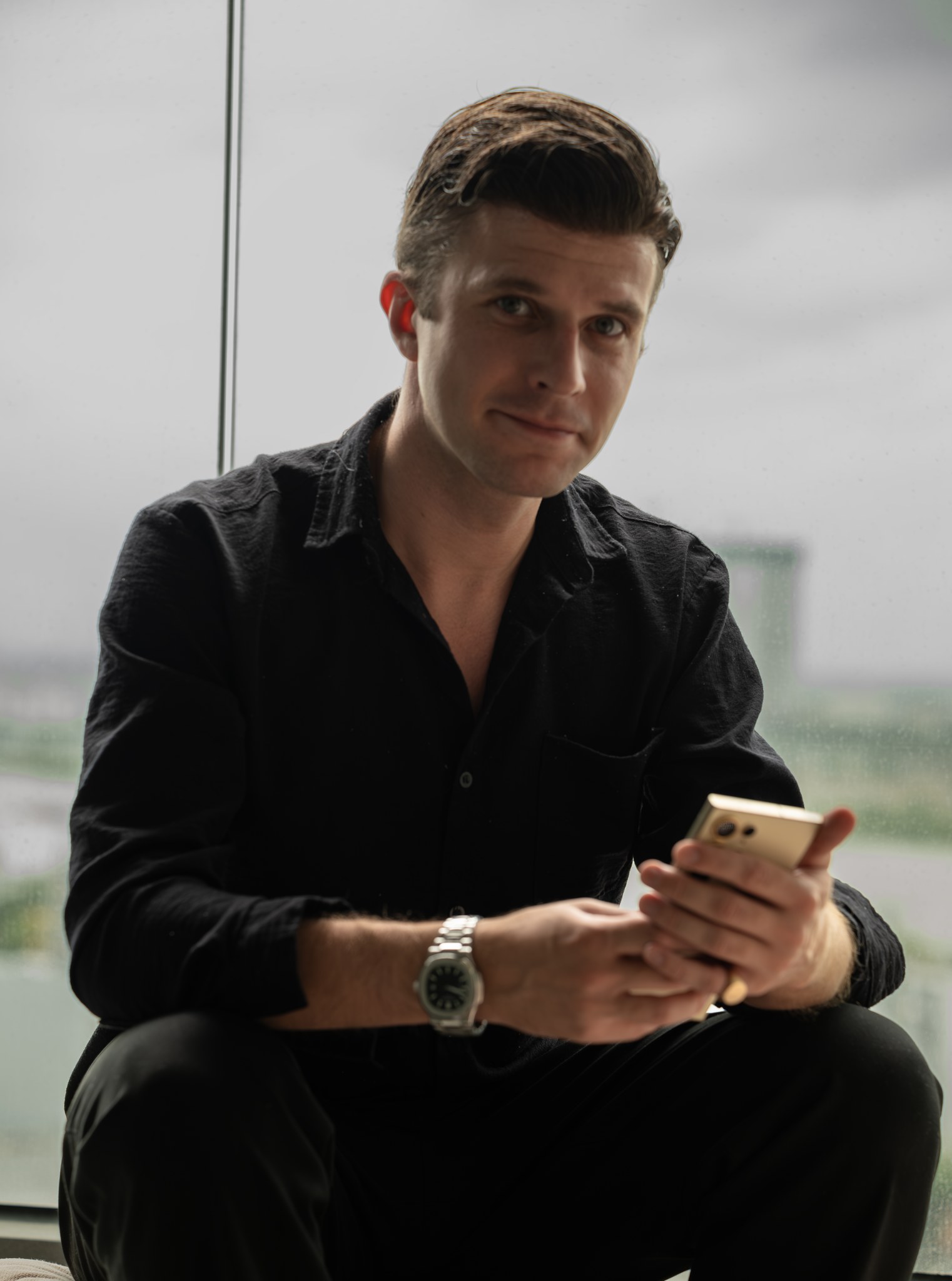
Kevin
BDS Dundee · Ex-dentist (2014–2026) · Founder, DigitalTCO
Kevin built DigitalTCO after a formal complaint exposed the gap between the clinical work he was doing and the records he was keeping. He created the AI dental documentation category in 2023 and the platform is now used by over 1,000 dentists daily across the UK and US.